The Dead
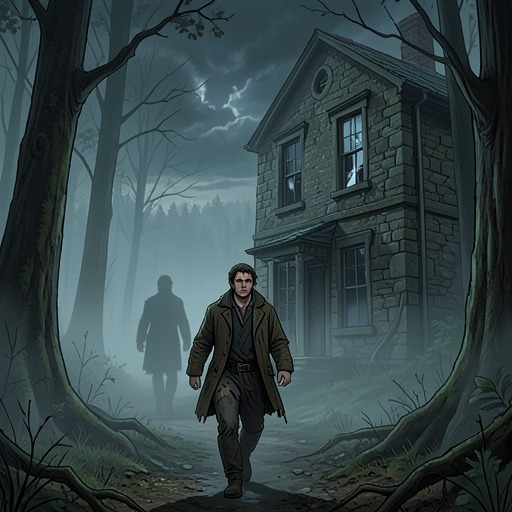
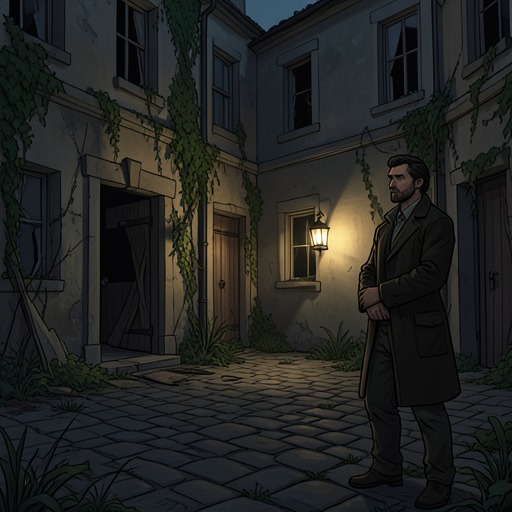
Pedro PáramoThe Dead are the persistent, often audible inhabitants of Comala, a presence that unsettles the distinction between an empty village and a populated one. They appear as wandering souls, voices lodged in walls and stones, and figures briefly recognized among the living. Their recurring requests and echoes expose a community in which death has not ended attachment, fear, or the need to be heard.
Presence in Comala
The Dead are first registered less as visible bodies than as sound. Damiana Cisneros of Media Luna describes echoes seeming confined inside walls or beneath stones, then following anyone who walks through the village. The sounds include creaking, laughter that seems old and tired, and voices worn out by repeated use. The image makes Comala’s apparent emptiness deceptive: its spaces retain traces of those who have spoken there, and movement through the village brings those traces close again.
The echoes also carry memories of a livelier past. Damiana recalls hearing the noise of a celebration for many nights and once approaching Media Luna to watch the dancing; what she found was the same deserted landscape visible in the present. The sound eventually stopped, which she accepts as a sign that joy, too, can grow tired. That vanished celebration remains part of the village’s acoustic afterlife, a remembered crowd whose noise survives the sight of empty streets.
Not every voice is indistinct. Damiana says that people can be heard speaking as though their voices came through a crack, yet clearly enough to be recognized. While going to fetch Juan Preciado, she encountered a funeral procession and stopped to say a prayer. A woman separated herself from the other women, asked Damiana to pray for her, then loosened her shawl; Damiana recognized her sister Sixtina. When Damiana asked what she was doing there, Sixtina ran back among the others. The encounter compresses the boundary between a funeral and the continuing life of the dead into a brief recognition and retreat.
The Restless and the Unabsolved
Sixtina had died when Damiana was twelve. She had been the eldest of sixteen siblings, and her death belonged to a distant past, yet Damiana describes her as still wandering in the world. The episode makes haunting not an abstract rumor but a family relation that persists after death. Damiana uses the encounter to reassure Juan that he need not fear newer echoes: the dead are already part of the village’s ordinary, if unsettling, condition.
Another account explains why the living believe Comala is crowded with wandering souls. A speaker insists that people remain in the village, naming Filomeno, Dorotea, Melquiades, old Prudencio, Sóstenes, and others as still alive and shut inside their homes. Their nights, unlike their days, are filled with fear: souls come out into the streets after dark, and the living avoid seeing them. The dead are said to be so numerous, and the surviving inhabitants so few, that people have given up praying for every soul’s eternal rest. A short turn at a prayer would not suffice for the multitude.
The same speaker links this spiritual condition to the living community’s own guilt. No surviving person, the account says, is in a state of grace; shame over sin does not absolve. An approaching bishop rejected a plea to marry a brother and sister who had been isolated together, ordered them to separate, and left without returning. The speaker presents his departure as leaving behind an image of perdition and connects the place’s abundance of souls in torment to the absence of absolution. This is a character’s explanation of Comala’s haunting, not a guarantee that every ghost has the same history or fate; it nevertheless gives the dead a collective condition shaped by religious failure and abandonment.
Voices, Fear, and Juan Preciado
The Dead’s voices become physically consequential in Juan Preciado’s account of his death. Dorotea challenges his claim that lack of air killed him: she says she found him in the square, far from the house of Donis, and that she and Donis dragged him into the shade of the portico. His body was already stiff and knotted as though he had died of fright; they later buried him. The exchange establishes that Juan is speaking after death, alongside Dorotea, while revisiting the moment when the village’s invisible population overwhelmed him.
Juan describes reaching the square, leaning against a portico pillar, and hearing what sounded like the steady murmur of a market crowd despite seeing no one. The noise gathered around him like a swarm. He could distinguish faint words asking for prayer, and says that his soul froze; he identifies the whispers as what killed him. His earlier explanation gives the terror a bodily progression: as he walked, cold rose from within his blood, and he realized that he was afraid. He had hoped the noise of a crowd would ease that fear, only to discover that the apparent crowd was unseen and its appeal was directed at him.
The scene turns listening into exposure. Juan does not encounter a visible attacker; he is surrounded by sound whose speakers remain out of sight, and their request for prayer becomes inseparable from his panic. Dorotea’s confirmation that his body was found and buried does not dispel the voices: the conversation itself continues among the dead. In Comala, burial marks a bodily fact without silencing what the dead have to say.
Memory, Abandonment, and Narrative Significance
The dead’s presence persists alongside the village’s material decline. After Susana San Juan dies, Pedro Páramo withdraws, abandons his properties, orders their contents burned, and sits facing the road by which she was taken to the cemetery. The land deteriorates, and the population dwindles as people leave to seek a living elsewhere. Some depart expecting to return, leaving family and possessions behind; others eventually forget the village and what they left there. The account does not make the dead the sole cause of this depopulation, but sets their continued presence against a community emptied by grief, neglect, and departure.
Eduviges Dyada, too, is remembered as having to wander like a soul in torment. Such references give the dead no single mode of return: some survive as echoes, some appear in recognizable human form, some are spoken of as restless, and others make their presence known through a plea heard in the night. The village’s silence is therefore never simply silence. It contains remembered festivities, family voices, prayers left insufficient, and requests that reach the living too late to offer easy comfort.
The Dead make Comala’s history audible without making it orderly. Their fragments do not assemble into a complete account of who has died or what each soul requires; they emerge through recollection, recognition, fear, and testimony. That broken pattern gives haunting a social force: the voices belong to a place where the living have become few, the dead remain numerous, and the obligations between them have not been settled. The village seems empty to the eye, but its echoes insist that neither its past nor its inhabitants have entirely gone.